ugcflows
How to get UGC brand deals with no following
5 min readUGC Flows
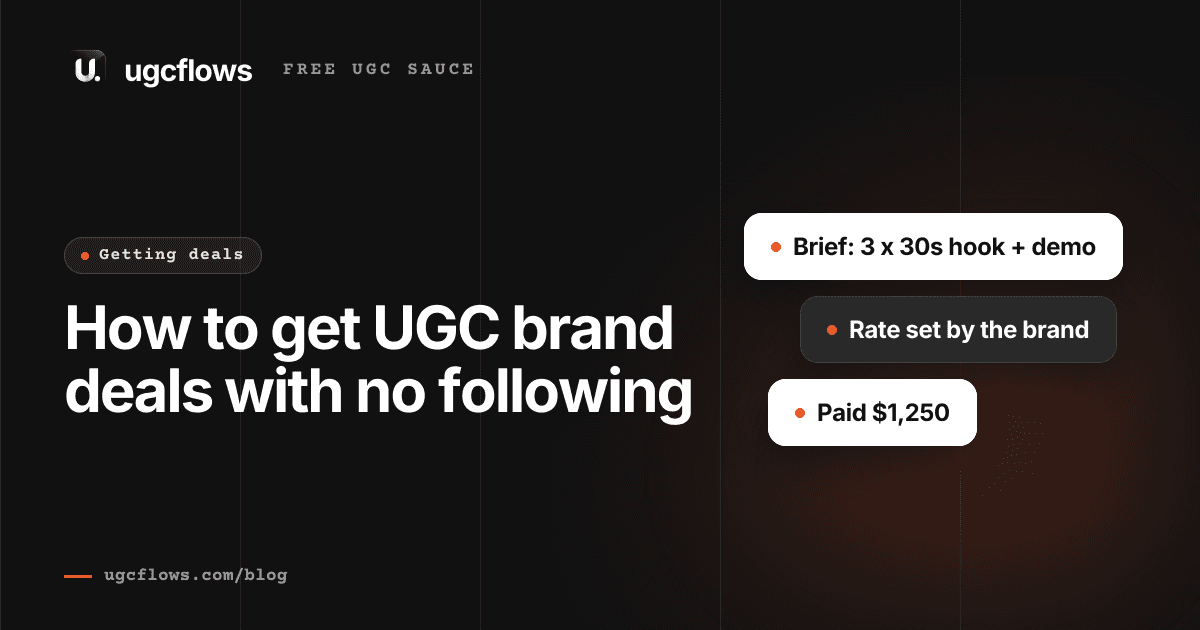
Brands that buy UGC are buying the video, not your audience. You need three to five finished vertical cuts on one link, a rate you can say out loud, and a way to reach the person who books creators. Followers are not on the list.
Key takeaways
- A campaign manager opens your link to answer one question: can this person make the video in the brief?
- Three to five finished vertical cuts on one link that plays without a login is the whole portfolio.
- Deals come through three doors: inbound from a page that ranks for your name, outbound pitches, and campaigns where the brand already wrote the rate.
- A pitch that works is five lines and a link. No attachments.
- If you post the video on your own account for pay, the FTC says disclose it in the video itself.
On this page
Who is buying, and what are they looking at?
UGC is video a brand runs on its own accounts and in its own ads. The person booking it is a campaign manager with a brief, a budget and a deadline, and they open your link to answer one question: can this person make the video in the brief? Your follower count does not appear in that question, which is why creators with 300 followers get booked and creators with 30,000 get ignored.
What does appear: whether your cuts look like the ads the brand already runs, whether the first second holds, and whether you can be reached and paid without a chase.
What do you need before you pitch?
- Three to five finished vertical videos in formats brands buy: a hook plus demo, a talking head, a testimonial, an unboxing or how-to, and one ad-style cut with a call to action. What a portfolio that converts looks like is its own post, and if you have not filmed any of them yet, start at how to become a UGC creator.
- One link that plays on a phone with no login. A drive folder that asks for access is a pitch that ends there.
- A rate you can say in one sentence, with the bonus and the usage rights as separate lines. If you have not priced usage rights, you will give them away; how much to charge for UGC is the three numbers and the rate calculator does the arithmetic for you.
- An email address and a way to be paid. Boring, and the thing that decides whether the second deal happens.
Where do the deals come from?
Three doors, and the working creators use all three. Inbound, from a portfolio page that ranks for your name and a bio that says UGC creator and what you shoot. Outbound, from short pitches to brands whose ads you have already studied. And campaigns, where the brand has already written the brief and the rate and is waiting for applicants.
On UGC Flows the campaigns come to you with the rate set. A brand posts the brief and the pay before a creator applies, so you are never guessing what it is worth, and when a brand picks you the deal lands in your tracker with its bonus rules already written in. That is on the Pro plan, and the guarantee on it is written in the same words on the pricing page: Guaranteed deal placement on Business and Pro.
What does a pitch that works look like?
- 1
Name the ad you watched
One line on which of their ads you studied, by name. It proves you did the work.
- 2
Say what you would make
One line, in their format. A hook plus demo for a skincare brand, a talking head for an app.
- 3
The link
One url that plays on a phone with no login.
- 4
The rate
One video, and the usage rights that come with it, as two numbers.
- 5
How to reach you
An email. Five lines total, no attachments.
What should you say no to?
- Payment in exposure or product only, once you have a portfolio. One free test cut is a normal ask; a second is a discount you did not agree to.
- A deal with no written window on the bonus and no term on the usage rights. Both are money, and both are decided by the words on the page.
- A brief that arrives after the price. The price is for the brief; a brief that grows is a price that should grow with it.
Do you have to disclose a paid post?
If the brand runs the video on its own channels, it is the brand's ad and the disclosure is the brand's problem. If you post it on your own account for pay or for product, the FTC's guidance is that you disclose the relationship clearly and in the video itself, not only in the caption, with plain words like ad or sponsored rather than abbreviations. That is a summary of the FTC's own pages linked below, not legal advice, and the pages are short enough to read in full.
Questions people ask
- Do you need followers to get UGC deals?
- No. UGC runs on the brand's own accounts and ads, so the brand is buying the video, not your reach. Creators with a few hundred followers get booked on the strength of three to five good cuts.
- How do I find brands that pay for UGC?
- Three ways: a portfolio page that ranks for your name, short pitches to brands whose ads you have studied, and campaign boards where the brand has already posted the brief and the rate. On UGC Flows the campaigns are on the Pro plan and the rate is set before you apply.
- Should I do a free test video?
- One is a normal ask from a brand deciding between creators. A second free cut is a discount you did not agree to, and a brand that asks for it is telling you what the paid work will be like.
How we know
The campaign section of this post describes how brands post work on UGC Flows: the rate and the brief are set by the brand before a creator applies, which is the thing we can say because we built the form they fill in.
UGC Flows · published · last reviewed
Sources
Stop running your tech UGC business by hand.
The editing, the posting and the finances of a UGC business in one app, from $199 a month. Brand campaigns on Pro.
Get Flows